Repositioning Alo Yoga Through Digital Strategy
DURATION
4 weeks
TEAM
Lan-Ting K, Myra C, Carol B, Atharva N, Anvita S
CLIENT
Course Project
SERVICE
Digital Strategy, Digital Analytics
TOOLS
Semrush, Similarweb
Long Story Short
Alo Yoga is a premium activewear brand originally known for yoga and wellness. Although the brand has expanded into fitness and lifestyle categories, much of its digital presence still feels focused on women’s yoga.
Our team worked on a digital analytics strategy project to understand why Alo was losing visibility compared to competitors and how its digital strategy could better support a broader activewear audience. I mainly focused on social media analysis, including content strategy, audience targeting, and competitor comparisons. Based on the insights, I provided recommendations to help Alo improve its brand positioning, reach broader audiences, and strengthen engagement across platforms.

Problem
A Gap Between How Alo Wants to Be Seen and How It’s Found
Alo Yoga is repositioning itself from a women-centric yoga brand into a broader fitness lifestyle brand. However, its digital presence has not caught up with this shift. The site is still structured, optimized, and discovered as a yoga-first brand, limiting its ability to reach new audiences through search and content. The problem is not a lack of visibility, but a misalignment between brand direction and digital presence.
Goal
Reposition Alo to establish it as a premium fitness lifestyle brand serving a broader and more diverse customer base
Competitor Analysis
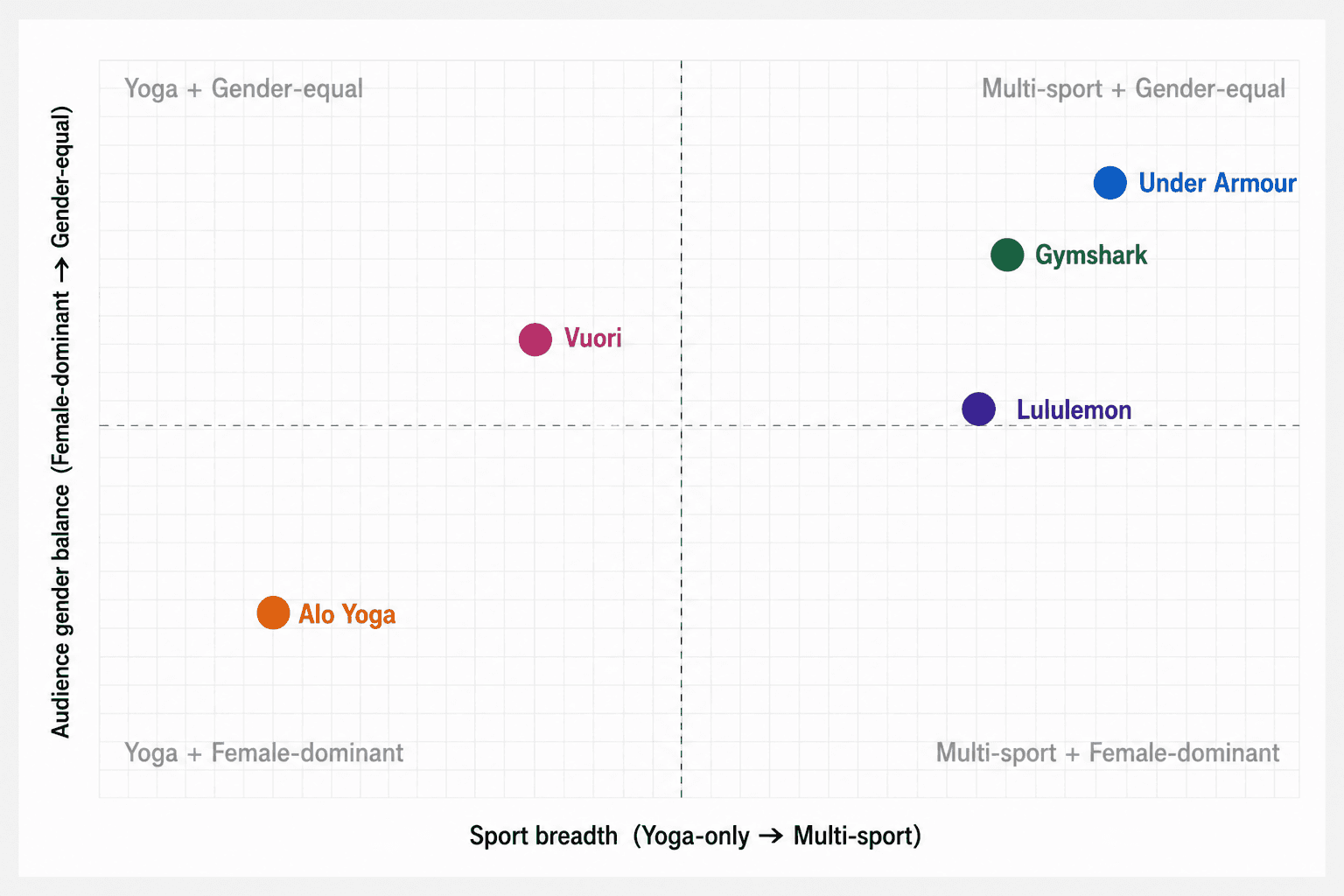
Overly Centered on Yoga and Women Market
We analyzed competitors including Lululemon, Gymshark, Under Armour, and Vuori to understand how each brand positioned itself online. We found that each competitor focused on a different audience and fitness identity. Compared to these brands, Alo remained much more focused on yoga and women’s wellness. This became an important pattern throughout the project.
Keyword Research
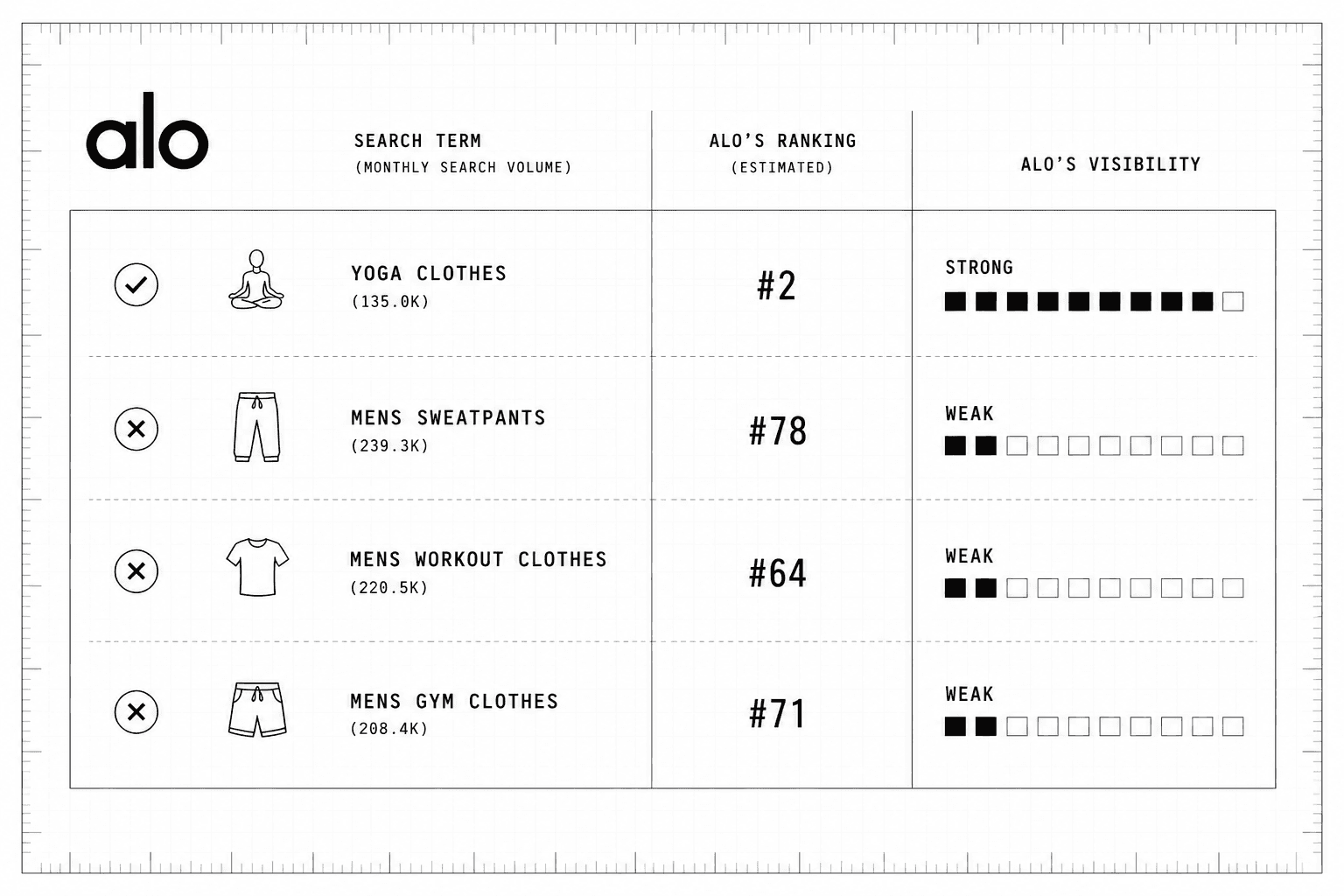
Missing Keywords in "men's wear" and "workout wear"
Our keyword research revealed that Alo’s visibility was heavily concentrated around yoga-related searches, while competitors performed much better across broader activewear categories.
SEO
Making new position visible for search engine
Current website SEO still reflects the brand’s old image. The website has technical issues that limit how search engines crawl it, pages that do not clearly communicate their purpose, and backlinks that mostly associate Alo with yoga.
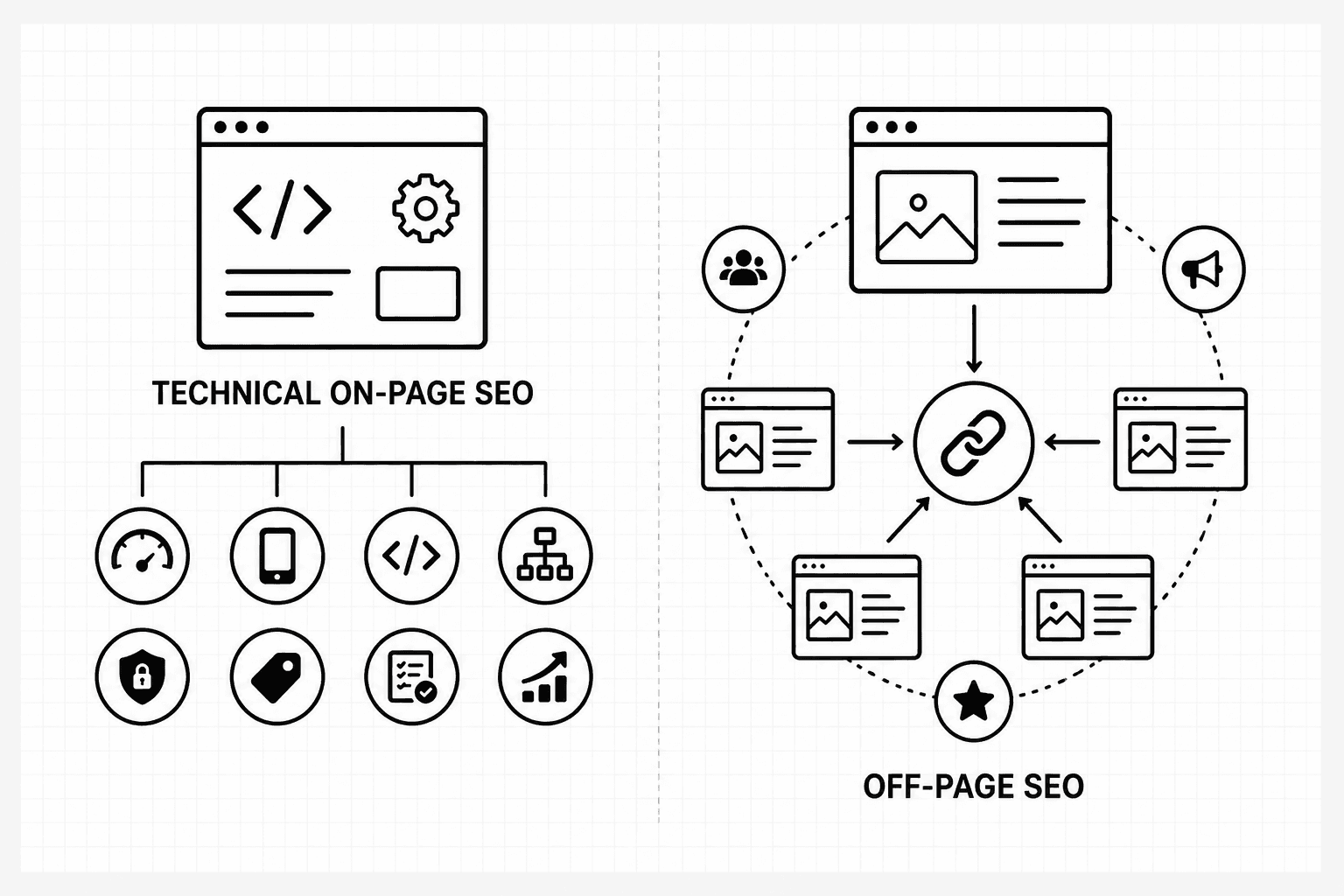
Technical SEO issues were limiting discoverability
36.5% of crawled URLs were non-indexable
104 URLs returned 4xx client errors
Alo failed Core Web Vitals on both desktop and mobile
On-page SEO limited broader category visibility and search performance
39 pages missing meta descriptions
48.6% of indexed pages missing H1s
36% of pages had shallow content under 200 words
Weak backlink quality reduced broader search authority
66% of referring domains were low authority
11% of backlinks used empty anchor text
Social Media Data Analysis
Strong Engagement but Weak Acquisition
Since I primarily focused on the social media analysis portion of the project, I spent more time analyzing audience behavior, platform positioning, and cross-platform content strategy.
01
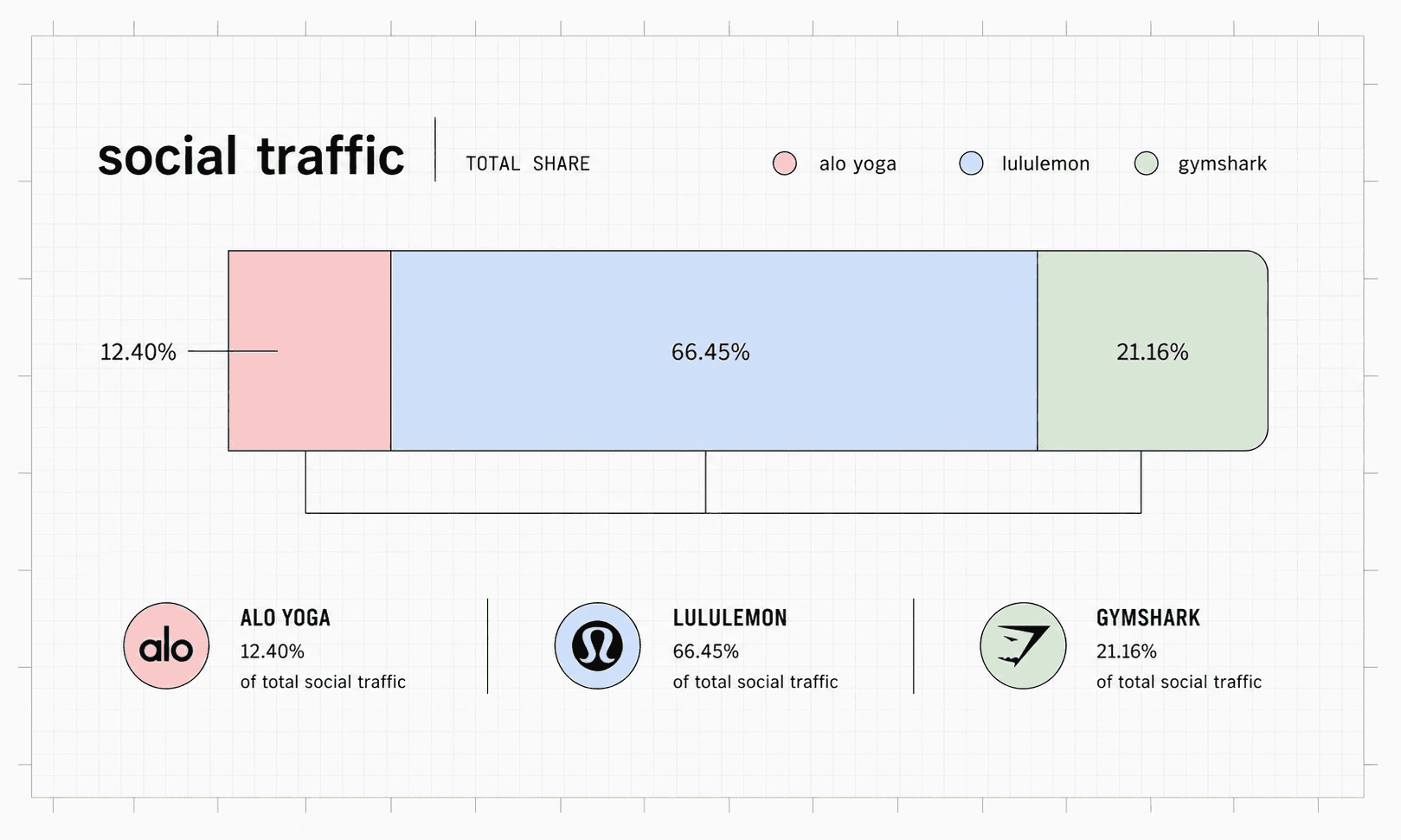
Alo captured only 12.4% of total social-driven traffic, far behind competitors
Alo generated only 1.33M social visits over the three-month period, accounting for 12.4% of total competitive social traffic. In comparison, Lululemon generated 4.72M visits (66.45%) and Gymshark generated 2.44M visits (21.16%).
02
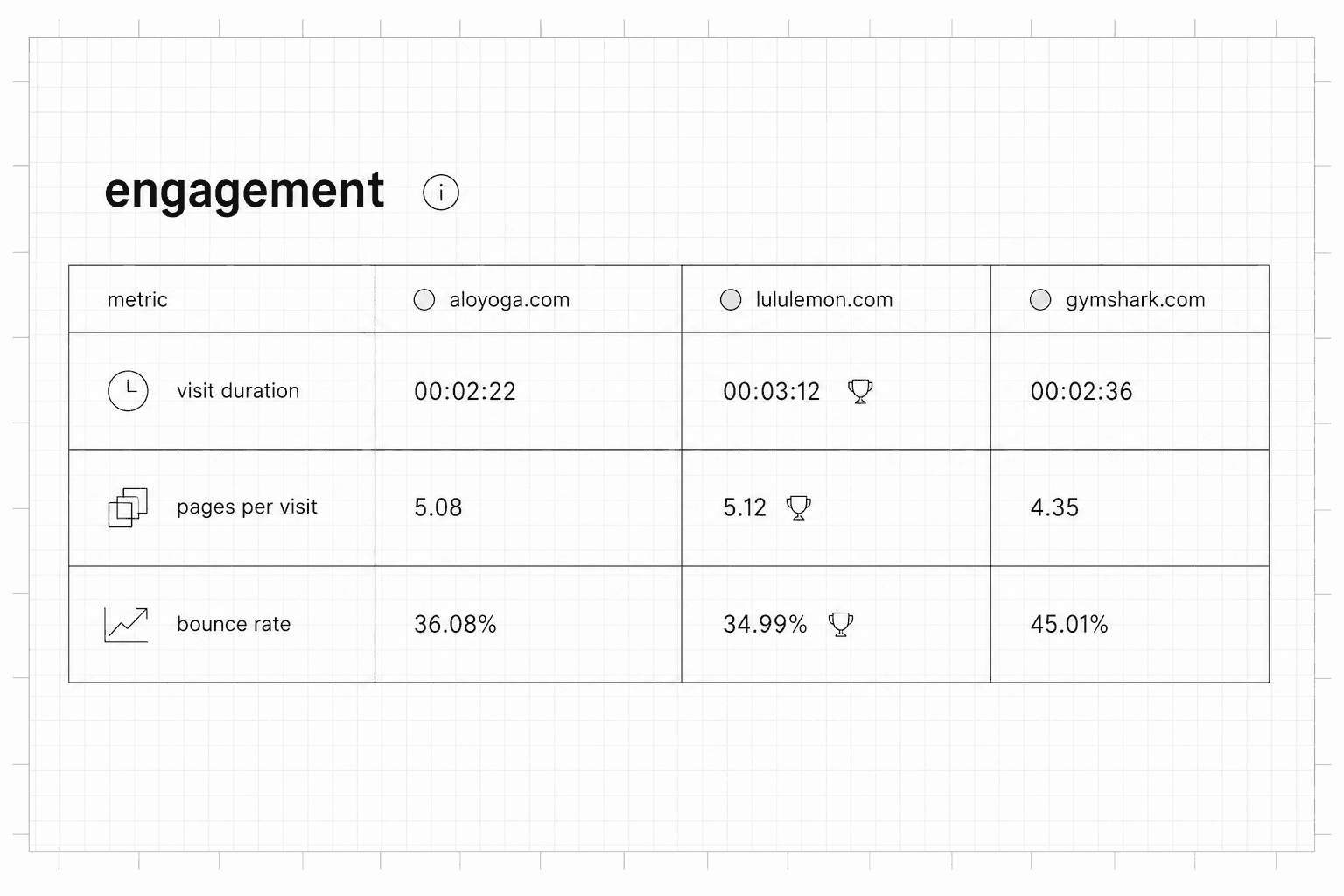
The problem was getting users to the site
Despite lower traffic volume, Alo’s on-site engagement remained relatively strong compared to competitors. Therefore, the main problem for them is acquisition.
03
TikTok as a Growth Opportunity
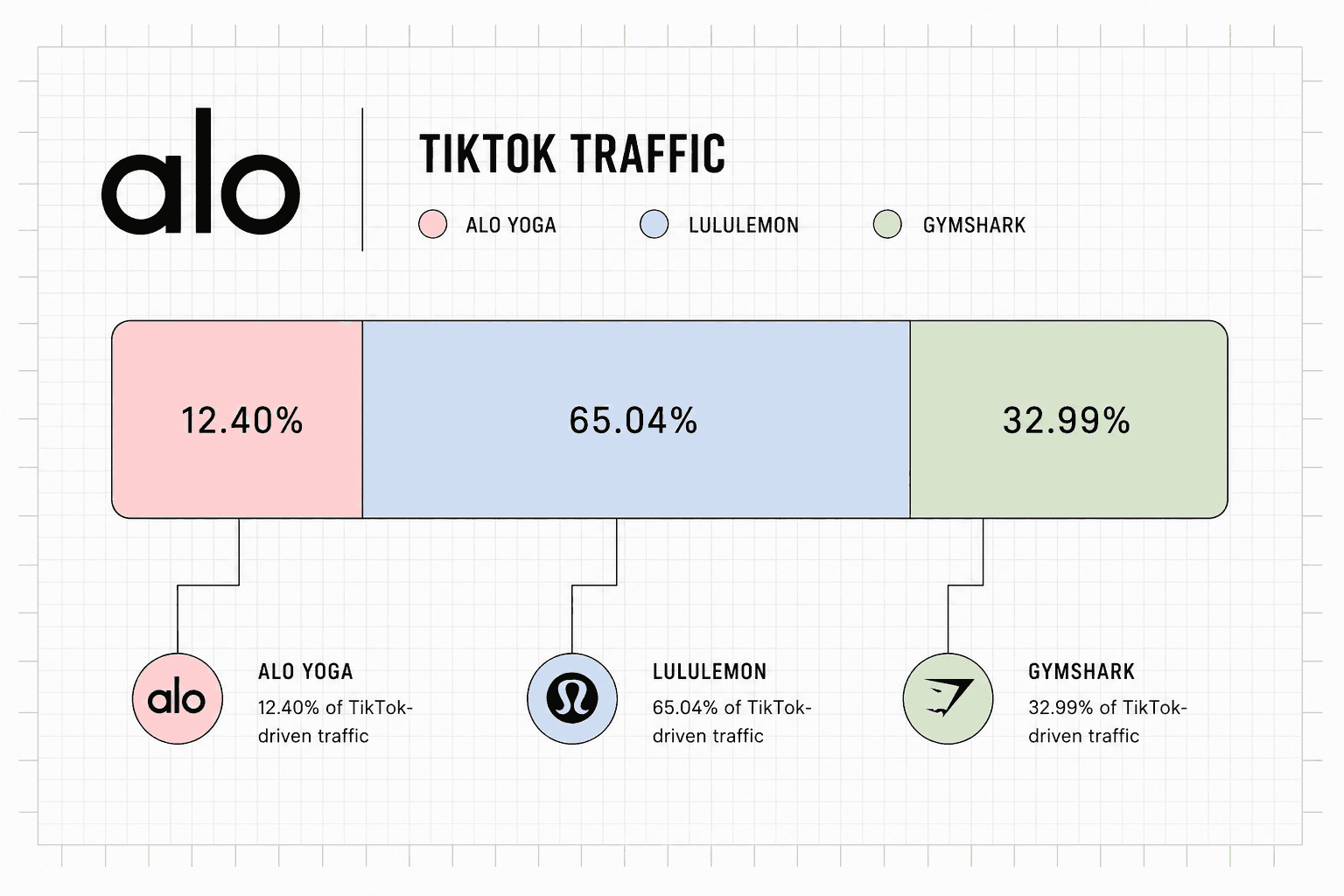
Although TikTok only accounted for 0.10% of total referring domains overall, Alo captured the largest TikTok referring share among the three competitors at 65.04%, outperforming Lululemon (32.99%) and Gymshark.
Social Media Content Strategy
Cross-Platform Audience Expansion
Beyond traffic performance, I analyzed how each brand used social content to position itself within the activewear market. Although all three brands competed in the same category, they approached content strategy very differently across platforms.
01
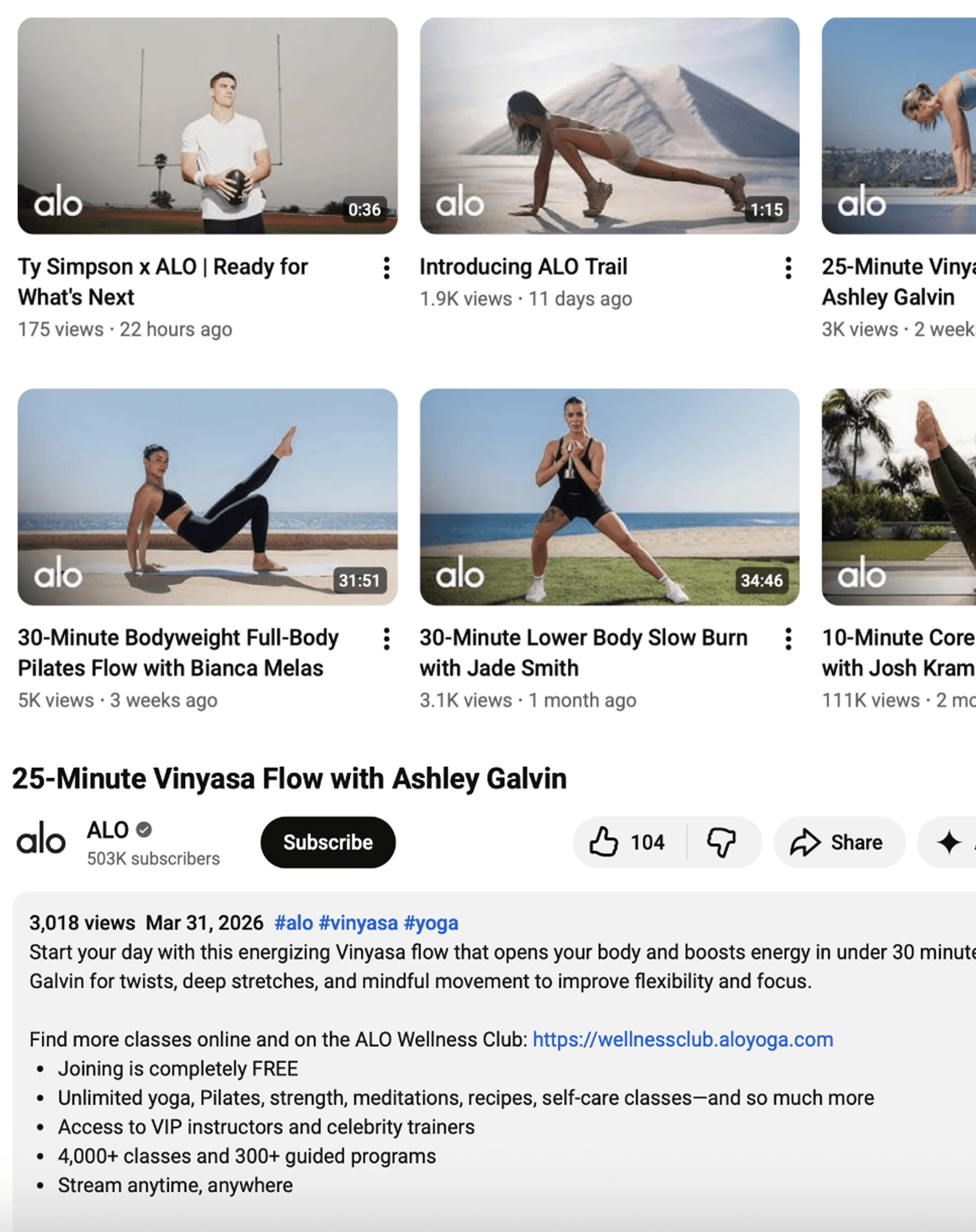
Alo’s content remained heavily tied to yoga and women-focused wellness
Lululemon focused on broader athletic lifestyles, while Gymshark focused on Gen Z gym culture and creator-led fitness content. In comparison, Alo remained mostly associated with yoga, wellness, and studio-to-street lifestyle imagery.
02
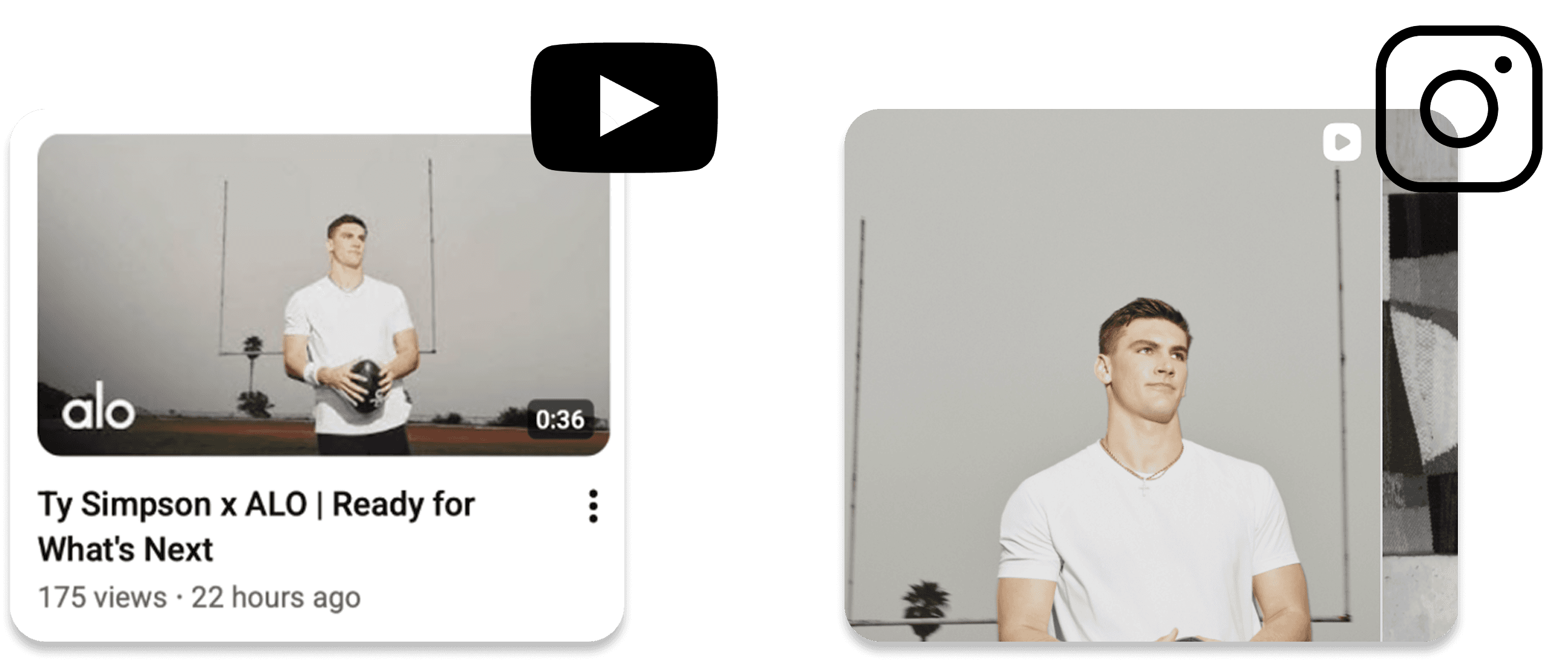
Alo lacked differentiated cross-platform and account identities
Lululemon used athlete storytelling and lifestyle-focused campaigns, while Gymshark focused on creators, trends, and community engagement. In comparison, Alo frequently reused similar content across multiple Instagram accounts, TikTok, and YouTube, making its social strategy feel less differentiated across platforms.
02
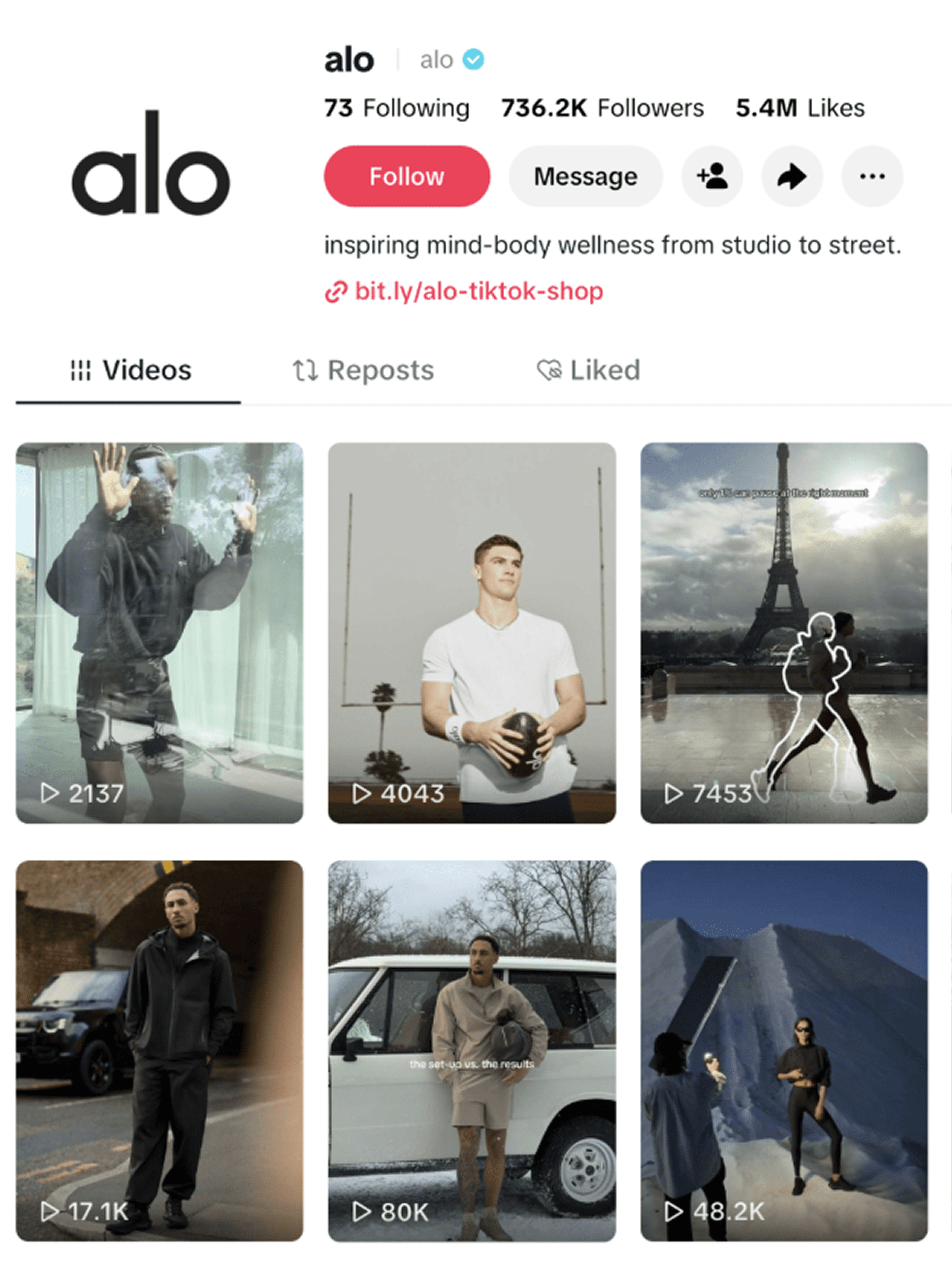
TikTok showed the strongest opportunity for broader audience growth
TikTok revealed the strongest opportunity for Alo to expand beyond its yoga-focused audience. Compared to Instagram, Alo’s TikTok content already felt more casual, unisex, and creator-driven, making it a stronger platform for experimentation and reaching broader fitness audiences.
Dashboard
Track whether the expansion drives real traffic and conversion
To support long-term strategy tracking, our team also designed an analytics dashboard that focused on measuring visibility, audience growth, and acquisition performance across SEO and social media channels.
Acquisition Metrics
Organic traffic growth
Social-driven traffic
Non-branded keyword rankings
Referral traffic by platform
Backlink growth and authority
Engagement Metrics
Bounce rate
Pages per visit
Average visit duration
Returning visitors
Social Media Metrics
Social traffic share
Traffic by social platform
Audience growth trends
Engagement across platforms
Referral performance from TikTok, Instagram, and YouTube
Next step
Future Content & Growth Strategy
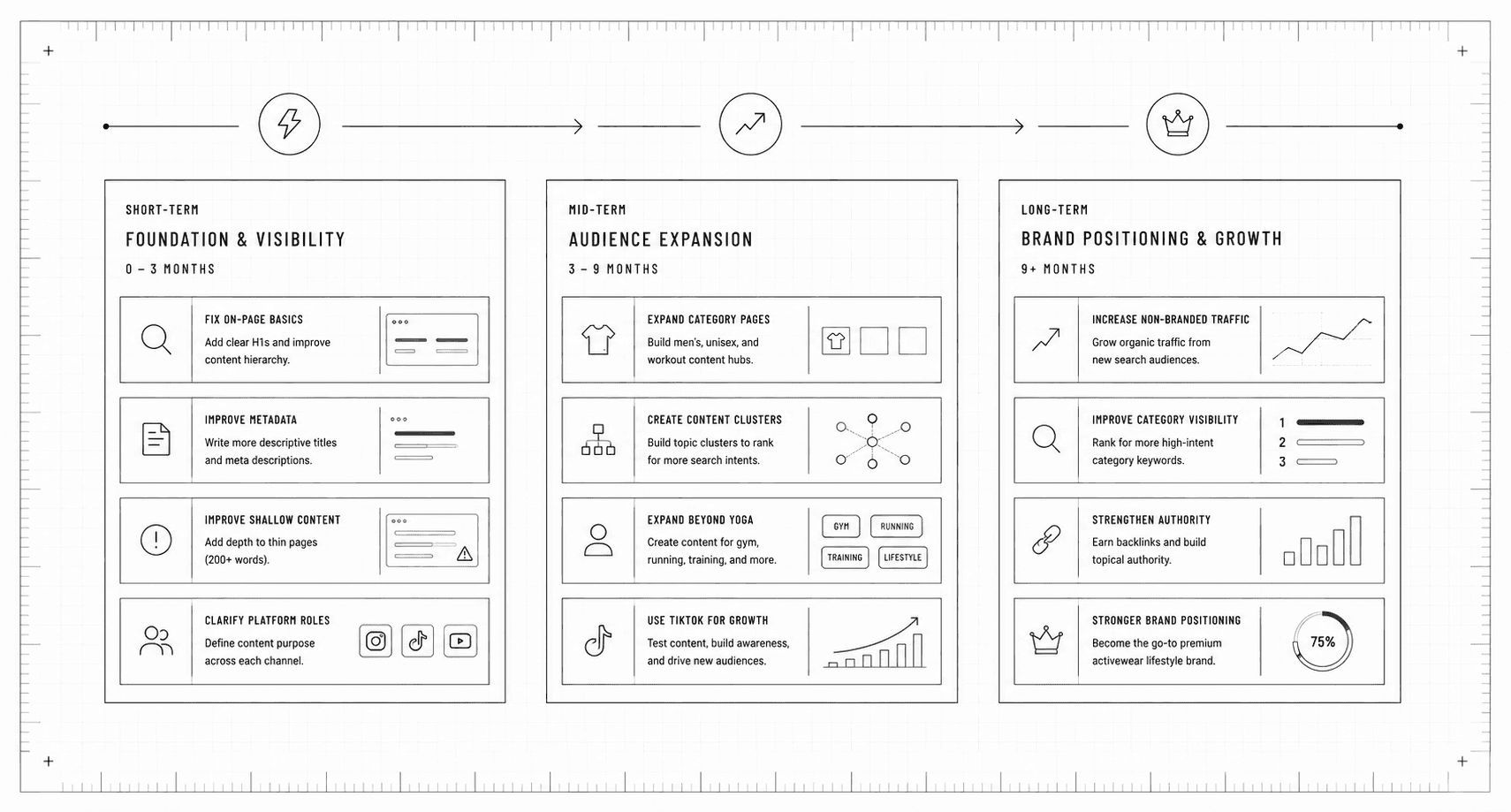
Based on the analysis, the next step would be helping Alo shift from a yoga-focused wellness brand toward a broader activewear lifestyle brand through a more differentiated digital strategy.
For social media, this would include creating more platform-specific content instead of reposting the same visuals across channels. TikTok could become a stronger experimentation platform for creator-led, trend-driven, and community-focused content that reaches broader fitness audiences.
For SEO and content strategy, Alo could expand beyond yoga-related visibility by building stronger landing pages and content clusters around workout, gym, and men’s activewear categories.